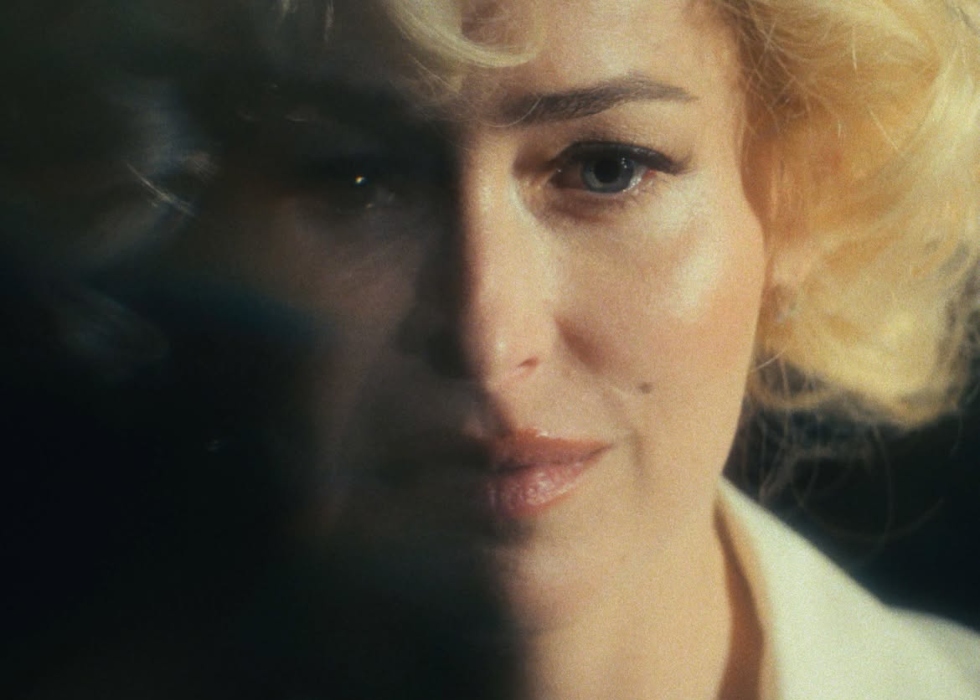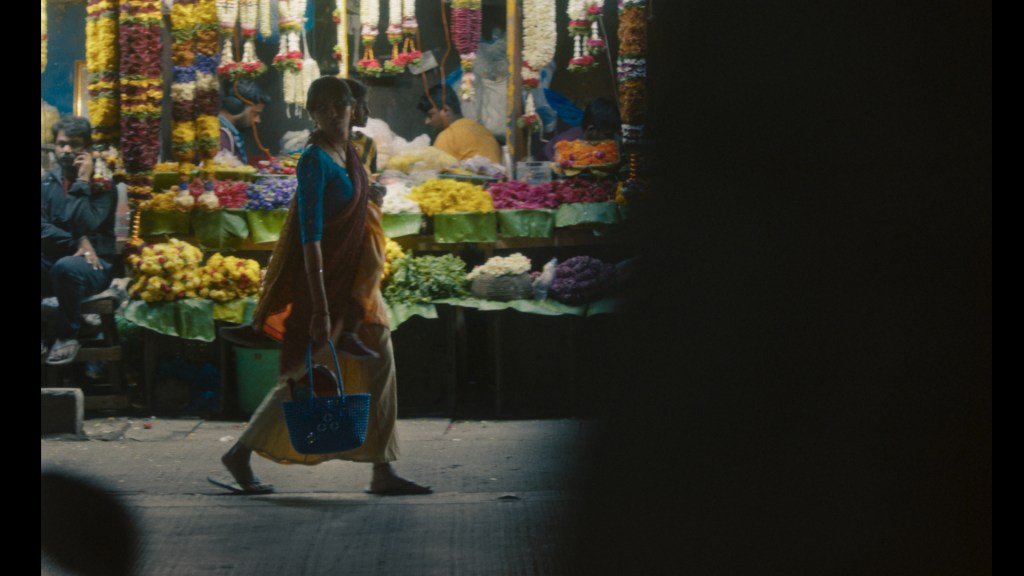
From Andrea Arnold and Domee Shi to Rayka Zehtabchi and Shirin Sohani, women have repeatedly proved that some of cinema’s most powerful storytelling can happen in under 40 minutes.
The Academy Awards may be dominated by feature films, but the short-film categories have long provided a vital platform for emerging filmmakers, bold ideas and stories that might otherwise struggle to find space on the Hollywood stage.
And throughout Oscar history, women have been responsible for some of the categories’ most memorable victories.
Across Live Action Short Film, Animated Short Film and Documentary Short Film, female directors and producers have used the short form to explore motherhood, poverty, equality, childhood, war, identity and human connection — often turning an Oscar win into a springboard for an extraordinary filmmaking career.
Andrea Arnold — Wasp
Long before Fish Tank, American Honey and Bird, British filmmaker Andrea Arnold won the Academy Award for Live Action Short Film for Wasp at the 2005 Oscars.
The raw British drama follows a struggling single mother attempting to balance her children with the possibility of a romantic relationship. Even in its short running time, the film displayed many of the qualities that would later define Arnold’s feature work: social realism, complicated female characters and an unflinching interest in lives rarely given centre stage.
Her victory remains one of the clearest examples of the short-film Oscar acting as a launchpad for a major directing career.
Alison Snowden — Bob’s Birthday
British-born animator Alison Snowden, alongside David Fine, won the Oscar for Animated Short Film for Bob’s Birthdayat the 1995 Academy Awards.
The witty, wonderfully observed animation follows a dentist whose surprise 40th birthday party does not unfold quite as planned.
Snowden and Fine later became known for their distinctive blend of humour, awkwardness and deeply human characters, demonstrating that animation aimed at adults could be intimate, funny and emotionally precise rather than simply fantastical.
Torill Kove — The Danish Poet
Norwegian-Canadian filmmaker Torill Kove won Best Animated Short Film for The Danish Poet at the 2007 Academy Awards.
The charming hand-drawn film considers love, coincidence and the seemingly insignificant moments that can determine the course of an entire life.
Kove’s win was especially significant for independent animation, showing how a highly personal visual voice and a deceptively simple story could compete on cinema’s biggest stage.
Suzie Templeton — Peter & the Wolf
British animator and director Suzie Templeton won the 2008 Oscar for Animated Short Film alongside Hugh Welchman for her stop-motion adaptation of Peter & the Wolf.
Dark, atmospheric and visually ambitious, Templeton’s interpretation transformed Sergei Prokofiev’s familiar story into an emotionally rich piece of filmmaking.
The victory demonstrated the extraordinary craftsmanship involved in stop-motion animation and cemented Templeton’s place among Britain’s most celebrated short-form animators.
Cynthia Wade and Vanessa Roth — Freeheld
Documentary filmmakers Cynthia Wade and Vanessa Roth won the 2008 Academy Award for Documentary Short Subject for Freeheld.
The film follows Laurel Hester, a terminally ill police officer fighting to ensure her pension benefits can be transferred to her partner.
It was an intensely personal story with wider political implications, illustrating one of documentary short filmmaking’s greatest strengths: the ability to place an individual human experience at the heart of a much larger social issue.
The story would later inspire a feature film starring Julianne Moore and Elliot Page.
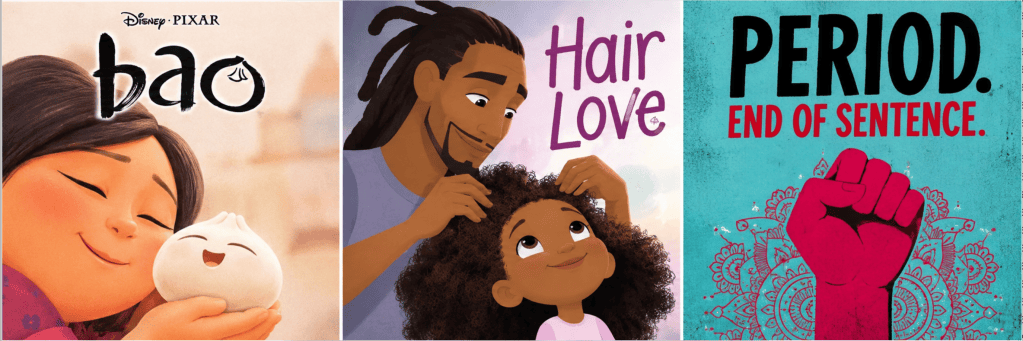
Domee Shi — Bao
Pixar filmmaker Domee Shi made history with Bao, which won the Academy Award for Animated Short Film in 2019.
The touching story of a Chinese-Canadian mother whose handmade dumpling comes to life became a beautifully imaginative exploration of motherhood, cultural identity, growing up and learning to let go.
The Academy confirms that Shi won for Bao before later receiving another Oscar nomination for her feature directorial debut, Turning Red.
Her journey from Oscar-winning short filmmaker to major studio feature director represents exactly why the short-film categories matter.
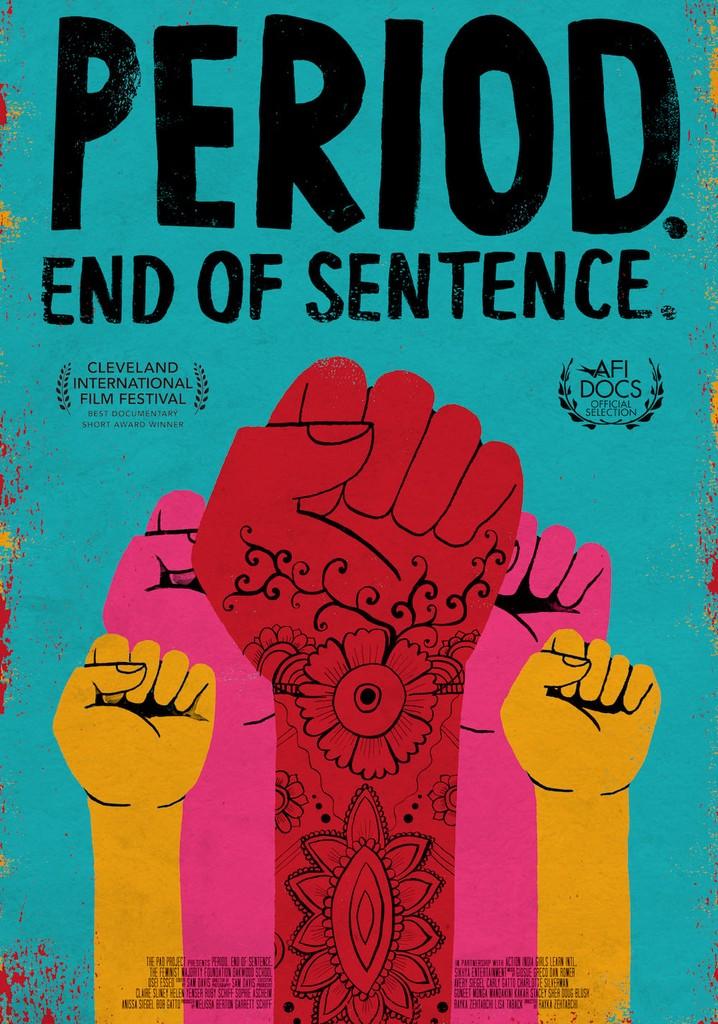
Rayka Zehtabchi and Melissa Berton — Period. End of Sentence.
One of the most memorable documentary short victories of recent years came with Period. End of Sentence., directed by Rayka Zehtabchi and produced by Melissa Berton.
The film follows women in rural India confronting the stigma surrounding menstruation and learning to manufacture affordable sanitary products.
It won Documentary Short Subject at the 2019 Oscars, turning an intimate story about women, dignity and opportunity into an international talking point.
Its victory was proof that a short documentary can do considerably more than observe the world — it can help change the conversation around it.
Karen Rupert Toliver — Hair Love
Producer Karen Rupert Toliver shared the 2020 Animated Short Film Oscar with Matthew A. Cherry for Hair Love, the touching story of a Black father learning to style his daughter’s hair.
Warm, funny and tender, the film celebrated fatherhood while putting a young Black girl and her natural hair at the centre of an animated story.
Its cultural impact extended far beyond its running time, illustrating the importance of representation not simply behind the camera but in the everyday family stories shown on screen.
Carol Dysinger and Elena Andreicheva — Learning to Skateboard in a Warzone (If You’re a Girl)
At the same 2020 ceremony, Carol Dysinger and Elena Andreicheva won Documentary Short Subject for Learning to Skateboard in a Warzone (If You’re a Girl).
Set in Kabul, the documentary follows young Afghan girls attending the non-profit organisation Skateistan, where they receive an education while learning to skateboard.
The film’s power comes from the contrast between the freedom its young subjects experience inside the school and the restrictions surrounding them outside it.
Rather than presenting the girls simply through the lens of hardship, the film foregrounds their personalities, ambitions, humour and resilience.
Alice Doyard — Colette
French producer Alice Doyard shared the 2021 Documentary Short Subject Oscar with director Anthony Giacchino for Colette.
The documentary follows former French Resistance member Colette Marin-Catherine as she travels to Germany for the first time in more than seven decades and visits the concentration camp where her brother died.
The result is an extraordinarily intimate examination of memory, grief and history.
Its Oscar victory again demonstrated the unique ability of the short documentary format to take an enormous historical subject and make it intensely personal.
Shirin Sohani — In the Shadow of the Cypress
Iranian filmmaker Shirin Sohani, alongside Hossein Molayemi, won the 2025 Academy Award for Animated Short Film for In the Shadow of the Cypress.
The dialogue-free animation explores the relationship between a former sea captain suffering from post-traumatic stress and his daughter.
Through striking imagery rather than exposition, the film explores trauma, family and the possibility of healing.
Its victory was another reminder that animation is capable of communicating enormously complex emotional experiences without needing conventional dialogue or storytelling.
Molly O’Brien and Lisa Remington — The Only Girl in the Orchestra
Also at the 2025 Academy Awards, Molly O’Brien and Lisa Remington won Documentary Short Film for The Only Girl in the Orchestra.
Directed by O’Brien, the film centres on her aunt Orin O’Brien, the pioneering double bassist who became the first woman to receive a full-time position with the New York Philharmonic.
Rather than approaching her achievement as a conventional biography, the documentary becomes a warm portrait of a woman who quietly broke barriers in one of classical music’s most prestigious institutions.
It feels particularly appropriate that a film about a female pioneer should itself join a distinguished lineage of Oscar-winning shorts created by women.
Why Short Films Matter for Women Filmmakers
Short filmmaking remains one of cinema’s most important entry points.
A filmmaker may not yet have access to the financing required for a feature, a large studio or an established network of powerful industry relationships. A short can provide something different: the chance to demonstrate a voice.
And an Academy Award can change everything.
Andrea Arnold’s journey from Wasp to internationally acclaimed feature filmmaker is perhaps the perfect example. Domee Shi moved from Bao to directing Pixar’s Turning Red. Others have used documentary shorts to bring overlooked communities, women’s rights, historical injustice and intensely personal stories to a global audience.
The Academy’s official records chart decades of women winning and being nominated across the short-film categories.
Yet perhaps the most exciting thing about the short-film Oscar is that its next winner may currently be making a film far away from Hollywood, with a tiny crew and limited resources.
There may be no red carpet yet. No studio campaign. No feature-film budget.
Just an idea, a camera and a filmmaker with something important to say.
For generations of women behind the camera, that has been more than enough to begin.