
Nostalgia promises a comforting return to the past. In Kathryn Ferguson’s Nostalgie, that invitation carries a dangerous catch. A faded pop star’s opportunity to feel important again becomes the starting point for a compelling examination of artistic responsibility: when a song enters the world, can its creator ever control what it comes to mean?
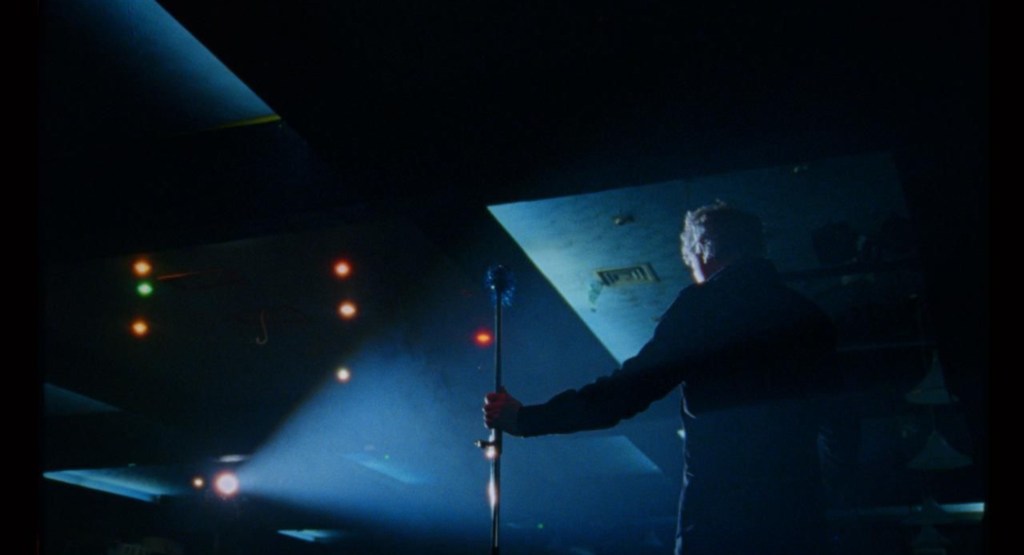
The BAFTA-nominated, IFTA-winning and Oscar-qualified short centres on Drew Lord Haig, played by Aidan Gillen, an English musician whose 1980s success has slipped into memory. An unexpected invitation to perform in Northern Ireland offers an escape from retirement and the seductive possibility of renewed recognition. But the discovery that his music has been appropriated for purposes at odds with its original intent turns a professional comeback into a moral dilemma.
For The Female Perspective, the women shaping this story are central to its appeal. Directed by Ferguson, written by Stacey Gregg and adapted from a short story by Wendy Erskine, Nostalgie brings three distinctive female creative voices to a narrative about a man’s relationship with his own importance. Their authorship opens up fertile territory: the distance between how someone wishes to be remembered and what their work actually represents to others.
Drew’s predicament raises an uncomfortable question about the hunger for approval. How closely does an artist examine an audience when that audience is finally applauding again? His desire to be seen gives the premise its emotional force, while the political associations of his music make that desire consequential. Recognition comes with conditions, and accepting it may demand more than he first understands.
Ferguson’s involvement makes particular sense. Her documentary Nothing Compares, about Sinéad O’Connor, engaged with a female artist whose public identity became a battleground for arguments about power, belief and who gets to speak. Nostalgie continues her interest in the contested lives of musicians through a different perspective: a performer confronted by meanings he did not choose, and by the limits of his own authority.
Her Belfast upbringing also gives the subject a personal connection. Northern Ireland provides a setting in which questions of identity and collective memory have particular weight. The premise recognises that a song can become attached to histories far beyond the experience of the person who wrote it. What one listener remembers with affection may carry a very different association for another.
Original songs and score by Bastille frontman Dan Smith place music at the centre of that conflict. The evocation of 1980s pop serves a clear dramatic purpose: Drew needs a musical past worth returning to before the implications of that return can take hold. Alongside Gillen, the cast includes Jessica Reynolds and Michael Smiley, with cinematography by Robbie Ryan.
What makes Nostalgie such a strong subject for a female-led film magazine is the scope of its women’s authorship. Ferguson, Gregg and Erskine claim space to explore male ego, political inheritance and cultural ownership without needing to make a woman the central character. That creative freedom matters.
At its heart lies a sharp and unsettling proposition: an artist may want the applause of the past without accepting responsibility for what has survived alongside it. Ferguson’s film puts that desire under pressure, turning the promise of a comeback into a reckoning.
★★★★★
Sophie Jackson