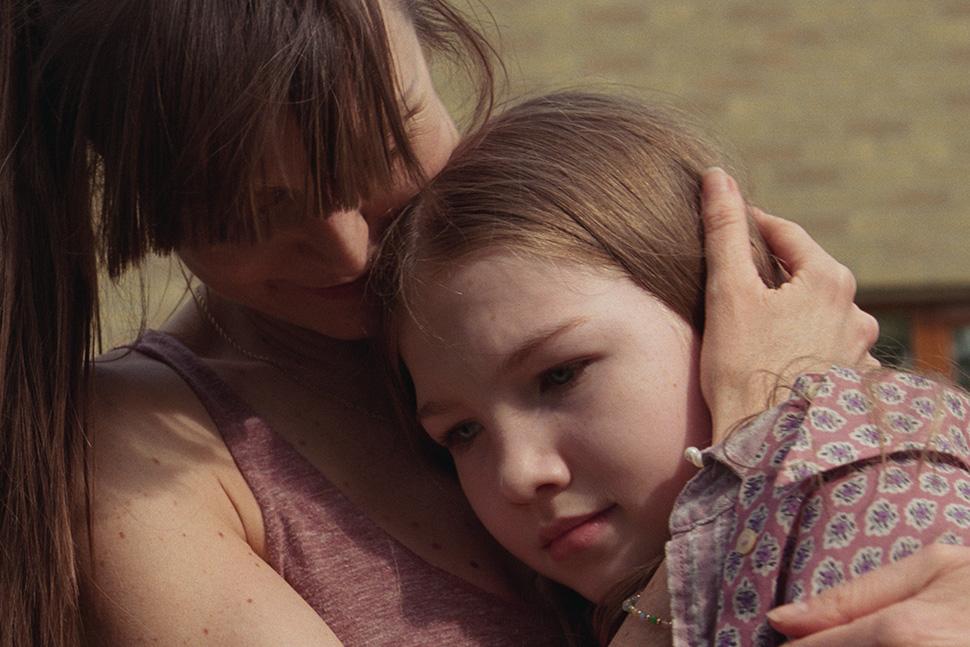
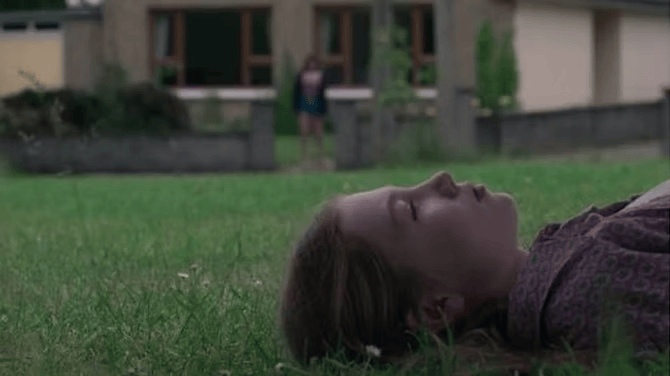
A young girl’s refusal to speak becomes a powerful demand to be heard in Paper Plane, Saoirse Ronan’s intimate debut as writer and director. Exploring the fragile space between a child’s need for protection and her mother’s difficulty providing it, this 15-minute short gives rising actress Martha Malone a compelling central role. Her Fay is the heart of the story: a girl whose defiance carries an unmistakable longing for home to feel safe.
Malone shines as a child attempting to change circumstances that adults have allowed to become unbearable. Refusing to return home until her father’s disruptive presence is gone, Fay stages a silent protest, communicating through paper planes. It is a striking premise because it gives a young girl agency while exposing how little power she should ever have needed to exercise. What might be dismissed as stubbornness becomes an act of self-preservation.
Fay is a particularly affecting role for a young performer because so much rests on what she withholds. Her silence carries anger, hurt and the hope that her mother will understand. Malone’s place at the centre of the film also echoes something of Ronan’s own beginnings as a young actress entrusted with emotionally demanding material. Here, Ronan makes room for another young talent to lead a story whose emotional stakes belong firmly to its child protagonist.
Opposite Malone, Clare Dunne plays Mam, a woman confronted with an agonising choice: follow her daughter or remain behind and let her go. Their relationship gives Paper Plane its most searching question. What happens when a child recognises the need for change before the parent she depends upon is ready to act?
There is particular poignancy in a daughter asking her mother to choose a different life. Fay’s protest contains love as well as resistance; her demand for distance from her father is also a plea for connection with her mother. Ronan’s story allows those feelings to coexist, acknowledging that loving someone does not automatically mean knowing how to protect them.
The paper planes offer a simple, evocative expression of that struggle. Objects associated with play become a means of communicating something painfully serious. They belong to childhood, yet carry a message Fay should not have to deliver. Through them, the film brings the loss of innocence into focus without losing sight of the young girl seeking reassurance beneath her resolve.
Produced by Shirin Eren, Paper Plane recently won Best Narrative Short at the Austin Film Festival, an Oscar-qualifying award securing its eligibility for Academy Awards consideration. It marks a significant milestone for Ronan’s first film behind the camera and brings welcome attention to Malone.
For all the interest surrounding its celebrated writer-director, it is Martha Malone who deserves to remain at the centre of the conversation. In Fay, Paper Plane gives us a young girl whose voice matters even when she chooses silence—and a young actress with every reason to be watched closely.
★★★★
Sophie Jackson